Nigeria leader urges peaceful vote
Violence and rigging fears persist in run-up to Saturday’s presidential election.
| Profiles |
A local anti-government fighter said his men hoped to scuttle the elections.
Baylesa is the home of the Ijaw ethnic group, which has been at the forefront of an armed campaign against the federal government ostensibly to demand more autonomy and a greater share of oil revenues.
Security forces drove off the attackers, a private security official said on condition of anonymity because of company prohibitions on dealing with the media.
| Your Views |
|
“How many elections on the African continent have ever been fair?” Mack Rogers, Chattanooga, TN, USA |
Major Sagir Musa, a military spokesman, confirmed an attack had taken place, but had no details.
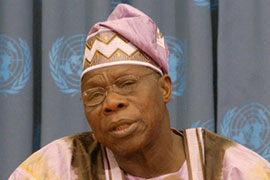 |
| Obasanjo admitted on Friday that the April 14 state elections were flawed [AP] |
“The world is watching us and we cannot afford to disappoint ourselves, our friends and the world,” he said
He appealed to election observers to “understand some of our limitations” and “not to exaggerate the negative” in Nigeria, a country which has a history of violence and electoral fraud.
On Tuesday, a group of 18 opposition parties threatened to boycott the national election unless the government could guarantee “transparency and fairness”.
But after three days of meetings, opposition parties were unable to reach a decision and the two main Nigerian opposition parties, the All Nigeria People’s Party (ANPP) and the Action Congress (AC), announced separately on Thursday that they will take part in polls to find a new head of state and legislative assembly.
The US, the EU and rights groups have expressed serious reservations over the polls and called on Nigeria‘s government to take immediate action to prevent electoral misconduct.