UN to cut Eritrea-Ethiopia mission
Growing frustration that neighbours have not ended a long-standing border dispute.
Published On 17 Jan 2007
UN deployment
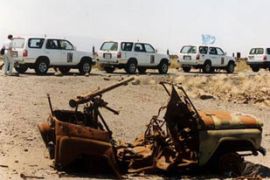
UN troops were first sent to Ethiopia and Eritrea in 2000 to enforce the cease-fire ending the border conflict.
As part of the peace agreement, both countries pledged to accept a new border as set out by an international commission.
But the new border has never been marked out after Ethiopia rejected part of it and Eritrea objected that Ethiopia was not being held to its word, leading to a four-year impasse.
The present UN deployment including 1,430 troops and support elements and 230 military observers.
Growing regional instability
The Horn of Africa region has become increasingly unstable since Ethiopia last month poured troops into Somalia to drive out Islamist forces, backed by Eritrea, that had seized much of the country’s south.
The United States has also recently bombed suspected al Qaeda targets near Somalia’s border with Kenya.
In a resolution adopted last September, the UN warned Ethiopia and Eritrea that it would downsize the peacekeeping mission by the end of January if it saw no “demonstrated progress” on marking out the border
Source: News Agencies