ANDREW BIRAJ/REUTERS
People observe a sit-in protest around a national flag of Bangladesh with a map of the country on it, made by flowers, as they attend a mass demonstration at Shahbagh intersection in central Dhaka. Tens of thousands of demonstrators have been camping in
Shahbag Square for weeks to demand the execution of several
Jamaat-e-Islami leaders accused of involvement in murder and other
atrocities during country's liberation war in 1971.
ANDREW BIRAJ/REUTERS
People attend a mass demonstration at Shahbag intersection. About 100,000 people rallied in Bangladesh's capital. The protests were triggered by the life sentence imposed on Abdul
Quader Mollah, assistant secretary-general of Jamaat. Most Bangladeshis had expected a death sentence
on charges of murder, rape and torture.
ANDREW BIRAJ/REUTERS
Bangladeshis attend a mass candlelight vigil around a portrait of Jahanara Imam, a late political activist widely known for bringing people accused of committing war crimes in the Bangladesh Liberation War to trial. Millions of people across the country expressed their solidarity with the Shahbagh movement during a candlelight vigil at 7 PM on February 14th.
MUNIR UZ ZAMAN/AFP/Getty Images
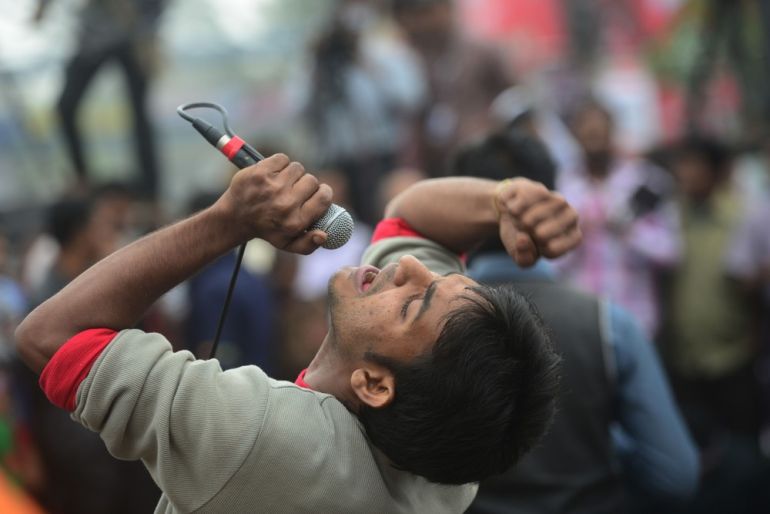
A Bangladeshi youth shouts slogans as Bangladeshi social activists and bloggers participate in a demonstration demanding the death sentence for the country's war criminal. At least 14 people have been killed so far during protests against government trials of Jamaat leaders.
ANDREW BIRAJ/REUTERS
People walk under a huge Bangladeshi flag as they attend a mass demonstration at Shahbag. The country's parliament amended war crimes laws last week to allow groups, not just individuals, to be prosecuted for war crimes. It will also allow for an appeal against Mollah's life sentence.
MUNIR UZ ZAMAN/AFP/Getty Images
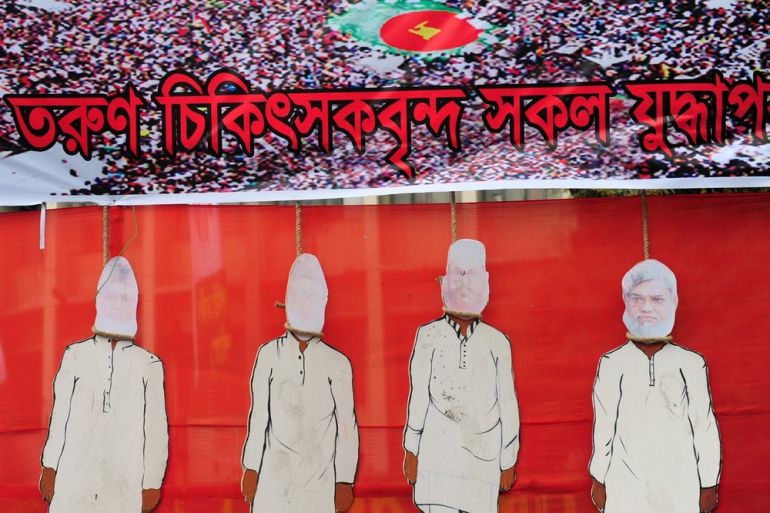
A depiction of the war criminals hanging is seen during a nationwide strike in Dhaka, the capital.
ANDREW BIRAJ/REUTERS
People attend a sit-in protest at Shahbagh on February 7, the third day of protests. Eight other Jamaat leaders, including its current and former chiefs, are
being tried by the tribunal, set up in 2010 to investigate abuses
during the 1971 conflict.
ANDREW BIRAJ/REUTERS
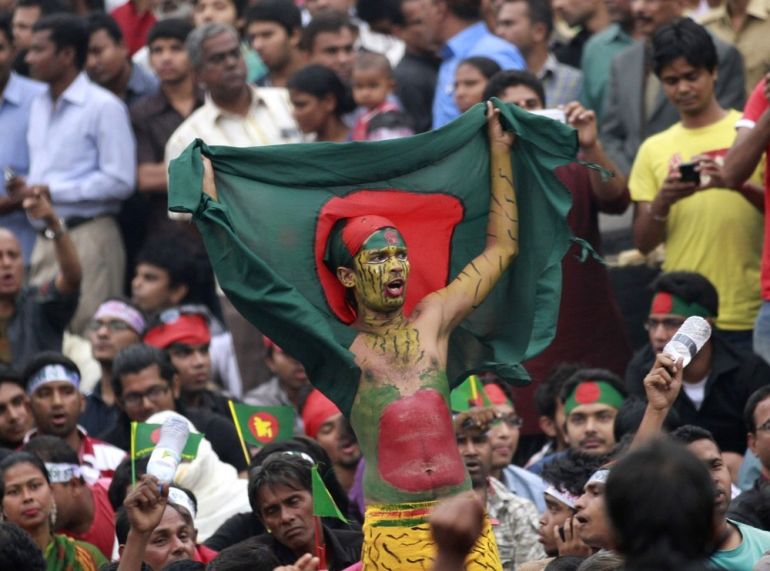
A man holds a Bangladesh national flag as he chants a slogan before a mass funeral as the body of Rajib Haider, an architect and blogger who was a key figure in organising demonstrations, arrives at Shahbag intersection. More than 100,000 Bangladeshi protesters, angered by the killing of one of their leaders, poured back onto the streets of the capital after Haider was attacked outside his home on the night of February 15.